
{主关键词}
极品飞车
【润童·活动】嬉雪派对,玩“嗨”冬日——开发区教工幼儿园冰雪游戏活动_我的网站

一 | 嬉雪派对 玩“嗨”冬日 ——开发区教工幼儿园冰雪游戏活动 春节期间的一场大雪,给幼儿园披上了一层厚厚的银装。洁白的雪是大自然送给东北娃们最好的礼物。你听,那银铃般的笑声在雪地上回荡;你看,那一个个小身影在雪的怀抱中穿梭。
Ecological restoration
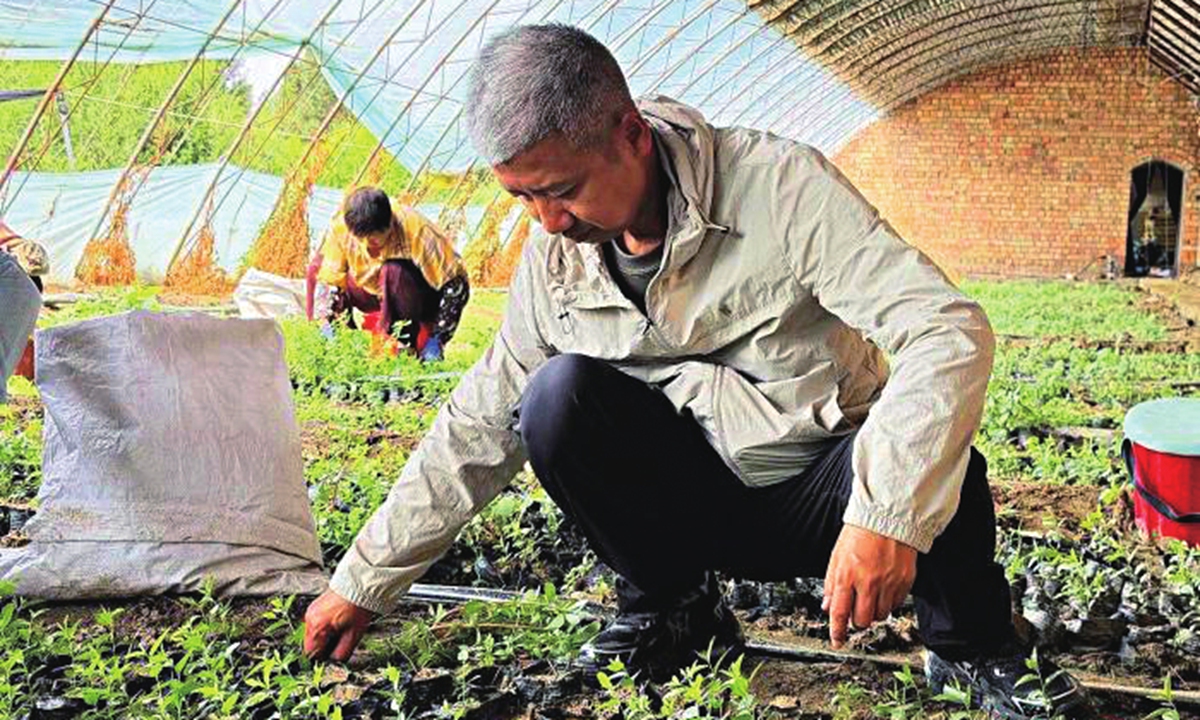
For over 30 years, Wensuyalatu, a member of the leadership group of the Urad Rear Banner forestry and grassland bureau, has made the Gobi Desert his workplace, dedicating his life to combating desertification, advancing ecological restoration through technological innovation, and helping local herders increase their incomes, according to the local bureau's official WeChat account.
Located on the edge of the desert in Bayannur's Urad Rear Banner, it is a key area in China's Three-North Shelterbelt Forest Program, a major ecological project aimed at strengthening the country's northern ecological security barrier.
However, early afforestation efforts in the desert were far from easy at the start.
The project covers 103,800 mu (about 6,920 hectares), including comprehensive treatment of 24,500 mu of desertified land, ecological restoration of 4,100 mu of non-desertified land, and 75,200 mu of enclosed grassland restoration. The project also includes the construction of 11 small-scale water conservation facilities, all of which required strict standards and extensive coordination.
The project also includes the construction of 11 small-scale water conservation facilities, all of which required strict standards and extensive coordination.
In 1991, Wensuyalatu, then in his early 20s, chose to devote himself to forestry and grassland conservation in the Urad Rear Banner. Since then, he has remained on the front lines of desertification control, witnessing the region's harshest environmental challenges and working to find solutions adapted to the fragile desert ecosystem.
In the early years, afforestation in the Gobi Desert was an extremely difficult task. The most critical planting season in spring often coincided with the strongest sandstorms of the year. Every year during the key afforestation period, Wensuyalatu would stay deep in the desert, guiding workers on planting techniques and management practices, while carefully overseeing every detail of the ecological restoration projects.
"Every spring, the wind and blown sand were so strong that it was hard to keep your eyes open. The sand hit your face like needles. During the day, we followed workers to dig holes and plant trees, and at night we stayed in temporary shelters to organize data and review the day's work. That was the normal routine for desertification fighters," Wensuyalatu recalled.
The road to restoring the desert was far from easy. Years of drought, low survival rates of seedlings, and skepticism from some local residents created major obstacles.
"At the beginning, it was really difficult. The climate was extremely dry, and many seedlings died after being planted. Some herders did not understand or support the work. They believed deserts were naturally barren and that no amount of effort could make trees grow there," Wensuyalatu said.
To change these perceptions, Wensuyalatu brought local residents to see firsthand the damage caused by desert expansion. Through visible results and long-term communication, he gradually won the understanding and support of the community.
Facing the ecological challenges of the Urad Rear Banner, Wensuyalatu began exploring new approaches beyond traditional restoration methods.
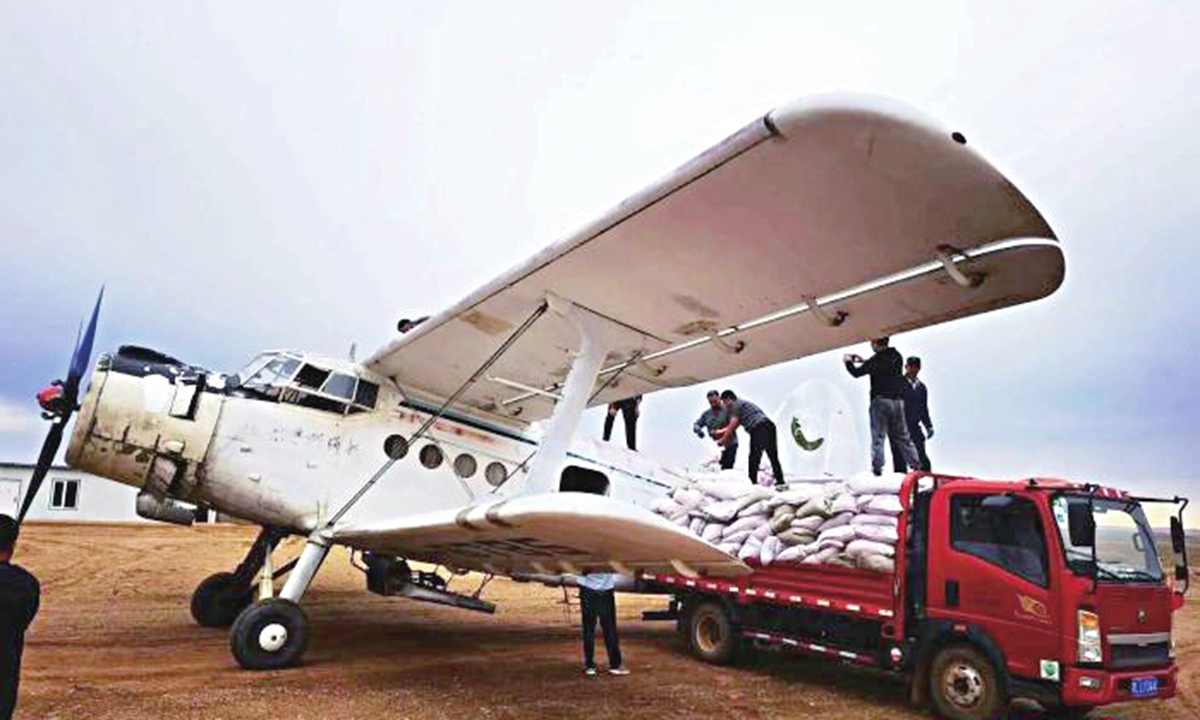
Since 2004, he has led efforts to tackle desert restoration challenges by introducing large-scale aerial seeding projects, creating a breakthrough approach for restoring degraded desert ecosystems in the region.
"Compared with traditional methods, aerial seeding is more efficient and can cover wider areas. Based on local climate and soil conditions, we select suitable desert plant seeds and precisely control the seeding height, density and timing to improve survival rates as much as possible and accelerate desert recovery," Wensuyalatu explained.
After years of effort, the aerial seeding projects under Wensuyalatu's leadership have restored more than 800,000 mu of desert land, with an effective restoration rate of 62.2 percent.
He also developed an integrated management approach combining "protection, management, retreat, restoration and publicity," establishing a mixed vegetation system of trees, shrubs and grass to curb desert expansion and reduce sandstorms at their source.
Beyond restoring greenery, Wensuyalatu has also focused on strengthening scientific research and protecting native desert species.
Starting in 2010, he devoted himself to the artificial cultivation of endangered native desert plants. After more than a decade of repeated experiments, he successfully developed cultivation techniques for rare species such as the endangered evergreen broadleaf shrub Ammopiptanthus mongolicus, Mongolian almond and drought-resistant elm.
Under his leadership, his team cultivated 6.5 million seedlings and completed more than 4,000 mu of high-quality afforestation projects, with seedling survival rates consistently exceeding 80 percent.
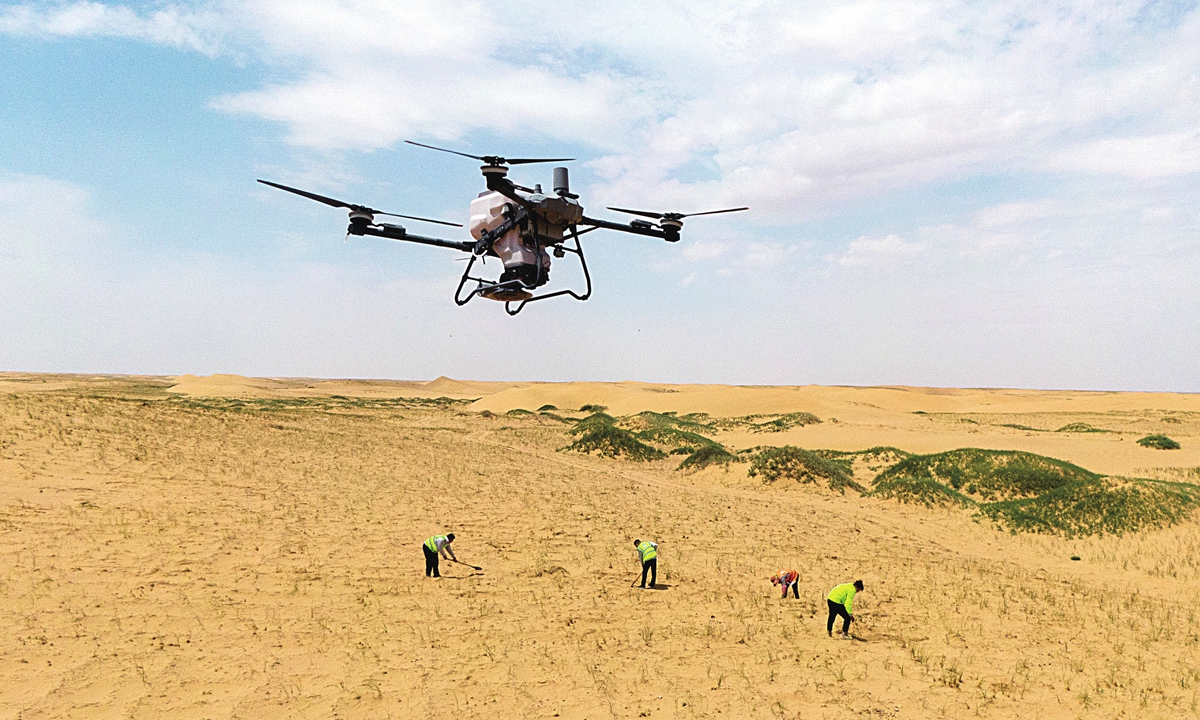
For Wensuyalatu, desert restoration is not only about creating ecological benefits, but also about improving people's livelihoods.
He has long promoted the idea that "trees should bring both ecological value and economic value." By leveraging local desert resources, he helped establish a 10,000-mu industrial base for desert plants and cistanche - a medicinal plant often grown in desert environments - across four key local villages, integrating ecological restoration with specialty desert industries.
"In the past, people thought desertification control was simply about planting trees - it took a lot of efforts but brought little income. Now things are different. By planting trees and developing industries such as cistanche cultivation, desert land can generate real wealth," a local herder said.
To ensure that local communities benefit from ecological development, Wensuyalatu introduced enterprises, supported family forest farms and professional cooperatives, and promoted large-scale, market-oriented operations.
The once barren desert has gradually become a "green treasure chest" for local herders, achieving a win-win outcome: greener landscapes, improved ecosystems, stronger businesses and higher incomes.
"Desertification control is not just an ecological project, but also a project that benefits people," Wensuyalatu said.
"Only when communities gain real benefits from protecting nature will they actively participate in ecological conservation. That is the key to making restoration efforts sustainable and achieving the vision that lucid waters and lush mountains are invaluable assets," Wensuyalatu said.
Global Times
。当大雪邂逅幼儿园,我们的嬉雪派对也正式开始。精彩,正在进行时! 冬 日 时 光 整装待发 看!萌娃们已经“全副武装”。穿上厚实的玩雪套装,带好各式玩雪装备,红扑扑的小脸已满是期待。冲!向欢乐的冰雪世界出发! 热身活动 游戏前,孩子们在老师的带领下活力满满地进行热身准备活动。大家随动感的音乐蹦跳摇摆,活动关节,为即将开始的嬉雪游戏蓄满能量。 嬉雪游戏之“文玩儿” 雪地颜料绘画、冻冰花、冻冰蛋、雪球染色……这里是雪地,更是孩子们的艺术场! 手工定制 东北大冰箱 “冬藏”怎么藏?大班哥哥姐姐告诉你!大班孩子在老师的带领下,自制“东北限定大冰箱”!你们猜,他们的冻梨能成功吗? 嬉雪游戏之“武玩儿” 跑起来、动起来、跳起来、闹起来!冰天雪地里,尽情游戏运动起来的孩子和老师,战胜了寒冷,一切变得火热非凡!看看,我们如何让这个冬日“嗨翻天”。 生活体验之“扫雪大作战” “雪停就是命令!” 扫雪,是每个东北人从学生时代开始,难忘的经历和责任。今天,孩子们也拿起自己的小锹小铲为幼儿园的各处扫雪,体验其中的乐趣与辛苦、成就感与责任感。

二 | 温暖时刻 尽情的嬉雪游戏后,孩子们用各种办法,为自己、为伙伴、为物品恢复温暖…… 有趣的冰雪游戏能增强幼儿体质,锻炼肌肉力量、身体协调性与平衡能力,也能提高幼儿对寒冷环境的适应力与免疫力。同时,接触冰雪更能丰富幼儿的感知体验,丰富对自然现象的认知,激发好奇心与探索欲。雪花见证了孩子们的童真,活动记录了他们的成长。

三 | 让我们一起将这份冬日的美好珍藏,共同期待孩子们更多的精彩瞬间! 审核:丁春竹 本期编辑:马乐 本期作者:金禹楠。
Current article:http://692khl.pochehaihuandangfenzei.shop/vqx4q/1zzm.html
Published on:02:26:22
- 8575首购低至 7.9 元,阿里云百炼Coding Plan火的一塌糊涂!
- 4324769下沉市场永远需要“靳东”
- 473121Western Investors Set to Return to India, EMEs as Expert Predicts 'Multiple Recessions' in US, EU
- 903622让威少提前选择退役的是它?奇才设置了什么条件,让威少拒绝签约
- 46965東京スカイツリー“5時間半”閉じ込めの恐怖…地上30メートルで乗客“乗り移り” 過去にも“原因不明”の緊急停止 調査で連休明けも臨時休業【news23】
- 9861三预警齐发,三级重大气象灾害应急响应启动
- 8562025年618活动最便宜优惠时间已确定:淘宝京东618最后一波6月16日20点开始买优惠力度最大!
- 665225告别打怪刷本!米哈游生活模拟游戏《星布谷地》官宣2026年冬季上线
- 79769正虹科技:上半年营业收入5.69亿元,同比增长14.19%
- 9372358太平洋保险退费
- 7622022年扬州世界田联半程马拉松锦标赛取消
- 8189Grassroots official’s 30-year fight against desertification in North China
- 6589"Only Followed Dharam Ji in My Career"- Salman Khan Breaks Down Remembering Dharmendra
- 5257008弗里克:我们必须统筹安排出场时间,球员也必须尊重教练组的决定
- 54504雷霆狂胜灰熊51分 分差排名季后赛历史第5位 前6名都是谁?
- 9437拜登和特朗普不断操弄关税问题展现“对华强硬”,专家:中方一直在为各种情况做准备
- 4181Third China-US Track 1.5 Dialogue held in Beijing as attendees discuss constructive strategic stability, practical cooperation
- 671884台风橙色预警:“紫檀”将于今夜至明晨在广东徐闻至广西合浦一带沿海登陆,“沙德尔”将于27日夜间至28日上午在浙江到福建一带沿海登陆
- 17948Tere Ishk Mein Box Office: Dhanush and Kriti Sanon's Movie Opens Well
- 6203六大AI模型被扔进加密市场厮杀,DeepSeek暂为交易之王
- 32549「日本人の審判が最も公平」 五輪フィギュア採点論争、データ分析で判明した“真実”に韓国衝撃
- 636995【仓单】8月26日上期所不锈钢期货仓单较上一日下降62吨
我的网站热门国内
- Copyright @ 2016-2017 我的网站 版权所有